- Long-term investing: Learnings from the Ashburton Targeted Return Fund
Long-term investing: Learnings from the Ashburton Targeted Return Fund
10 January 2024
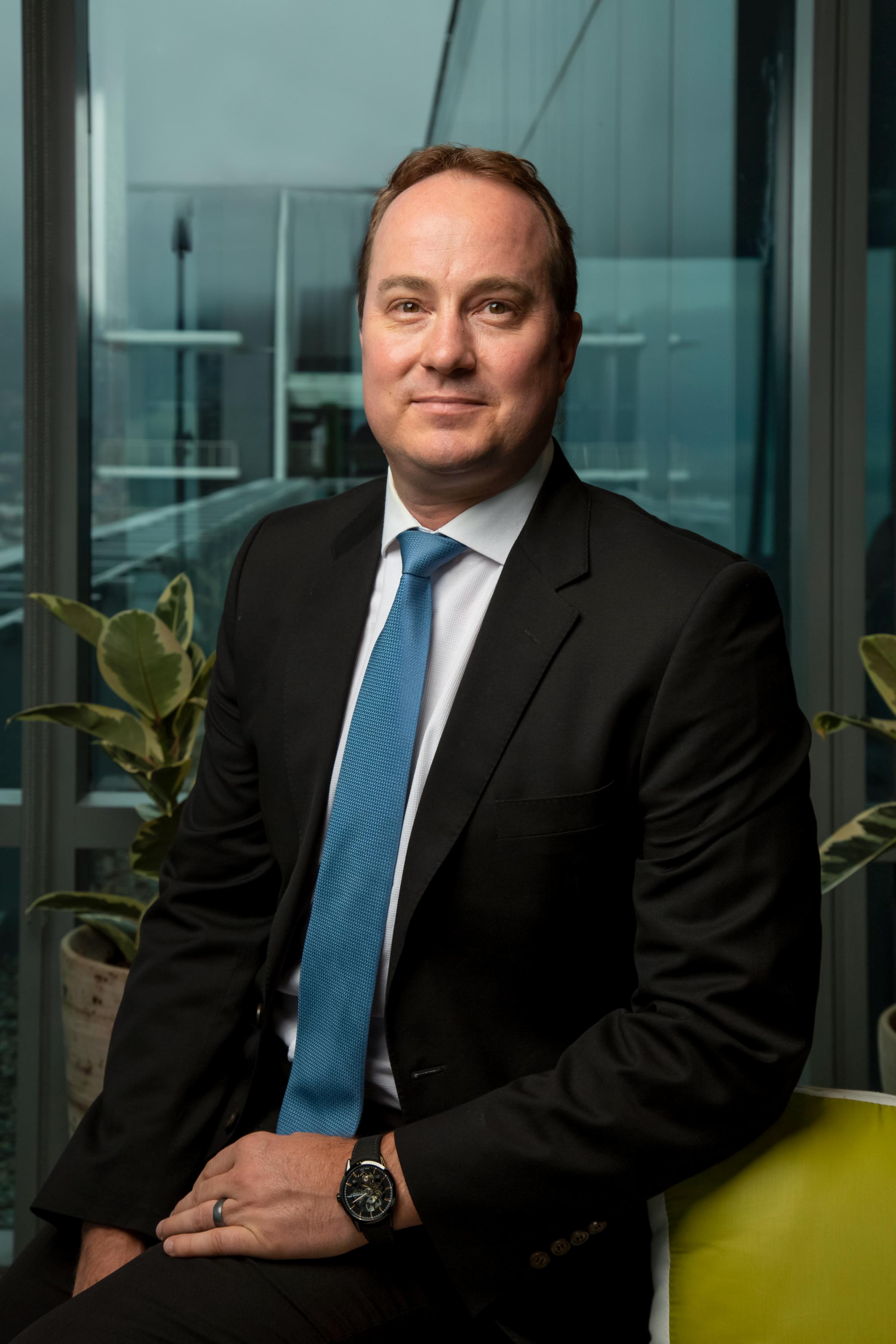
Albert BothaHead: Fixed Income
Share via:


Same trusted investment partner. Fresh new experience. Trust that you discover a faster, simpler and more intuitive online experience.
Beware of WhatsApp fraudsters using our name. We never offer investments or request personal info on WhatsApp.

Ashburton Fund Managers (Proprietary) Limited is a licensed Financial Services Provider ("FSP") in terms of the Financial Advisory and Intermediary Services Act, 37 of 2002, FSP number 40169, and Ashburton Management Company RF (Pty) Ltd is an approved manager of Collective Investment Schemes in terms of Collective Investments Scheme Control Act, 45 of 2002 by the Financial Sector Conduct Authority (FSCA) and is also a full member of the Association for Savings and Investment SA (ASISA).

2 Merchant Place, 1 Fredman Drive, Sandton, Johannesburg, 2196

+27(0) 860 000 339
Fully Invested
© 2026 Ashburton Investments. All rights reserved.

It is not widely understood how tough it is to succeed in the asset management industry. Most funds and houses never really attain any meaningful scale and everything one achieves can come crumbling down very fast. It’s a reputation game and as Warren Buffet says, “It takes 20 years to build a reputation and five minutes to ruin it.”
At Ashburton we have been on a journey to carefully rebuild and relaunch one of our portfolios - the Ashburton Targeted Return Fund – over the last three years. It sits in the low equity category along with more than 150 other funds. Over 30% of the funds in the category have less than R200 million in assets, with the median fund sitting on R350 million.
Or to put it another way, the top six funds have roughly the same Assets Under Management (AUM) as the bottom 150.
In our industry, the average sales discussion requires a fund to have good performance over the last year. Once this is achieved, clients want to see it being maintained for three years in different market environments. After this, if the fund is too small, you can’t gather assets, as allocators don’t want to be too large a proportion of any fund.
It’s been said that 50% of asset management success is just survival – and while this is true, what remains unsaid is how hard survival can be.
The journey to reform the Targeted Return Fund started in July 2020 when the decision was made to shift the management of the fund to my colleague Chris Siriram, Head of LDI and Structuring and myself. This was done because of the nature of the mandate and the category. The fixed income allocation in the fund would always be between 55 and 70%. We wanted to move to a more risk-aware approach while also taking advantage of the changing local landscape where one can more easily get solid, predictable, real returns in bonds and other fixed-income assets than was historically the case. The goal is to manage a portfolio that is built for this purpose, rather than being a de-risked, scaled-down version of a Balanced Fund, as is so frequently the case in this category.
Media Release
9 May 2025
This article as fist published by News24 on 7 May 2025
Climate Adaptation: SA’s Path to Resilience Amid Global and Local Challenges
As the world grapples with escalating climate risks and impact, South Africa stands at a pivotal juncture.
The nation’s economic, social and environmental vulnerabilities underscore an urgent need for climate adaptation.
Defined as the process of adjusting to current and future climate impacts to reduce harm and seize opportunities, adaptation is not just a theoretical exercise; it’s a socioeconomic imperative for South Africa and the broader African continent.
Amid discussions at the G20 and COP29, adaptation finance emerges as a critical lever to build resilience, yet significant obstacles hinder its implementation. But what does adaptation mean for South Africa and why is it so important? We consider the barriers to private sector financing, and how global frameworks can catalyse progress.
What is Climate Adaptation?
Climate adaptation involves proactive measures to mitigate the impacts of climate change—such as drought-resistant crops, flood-resistant infrastructure, or water reclamation projects.
Unlike mitigation, which focuses on reducing greenhouse gas emissions, adaptation prepares communities and economies for inevitable changes.
In South Africa, this translates to safeguarding water security, bolstering food systems, and fortifying cities against extreme weather. The Presidential Climate Commission’s March 2025 report highlights key programmatic areas: resilient water, agriculture, cities, and transport, estimating a financing need of R866 billion by 2030 (1.37% of GDP). Globally, the UNEP’s 2024 Adaptation Gap Report pegs developing countries’ needs at USD 387 billion annually through 2030, with Africa alone requiring USD 579.2 billion from 2020-2030 per its Nationally Determined Contributions (NDCs).
Why Adaptation Matters to South Africa and Africa
South Africa’s climate challenge is stark.
Temperature anomalies have risen over the past century, and economic damages from floods, heatwaves, and droughts are projected to intensify, with losses potentially reaching R1.4 trillion annually by 2050 if unaddressed. For a country already battling unemployment, inequality, and energy insecurity, these risks threaten to unravel developmental gains.
Africa, meanwhile, faces a disproportionate burden. Despite contributing less than 4% of global emissions, it requires vast adaptation investments to counter rising climate-induced disruptions to agriculture, water, and infrastructure.
Adaptation is a smart investment. Projects like eMalahleni Water Reclamation Plant, which treats acid mine drainage to supply potable water, or the Working for Water Program, which removes invasive plants to restore river flows, demonstrate tangible benefits: job creation, resource security, and economic stability. For South Africa, a leader in the region, scaling and replicating such initiatives could position it as a model for Africa, where adaptation finance flows remain woefully inadequate.
Obstacles to Private Sector Financing
Despite its promise, adaptation struggles to attract private capital.
Several barriers stand out. First, perception casts adaptation as a public sector duty, deterring private investment. This is compounded by information asymmetry—private players lack reliable climate risk data, unlike the quantifiable CO₂ reductions of mitigation projects. Measuring the effectiveness of a drought-resistant crop, for instance, is far trickier than tallying carbon emissions avoided by a solar farm,.
Second, nomenclature and frameworks confuse investors. Terms like “green,” “blue,” and “adaptation” are used interchangeably—. Third, shallow capital markets in Africa limit bond mandates not just for adaptation, with investors chasing risk adjusted returns elsewhere. High borrowing costs, driven by real or perceived risks and long-term investment horizons, further deter engagement.
Finally, adaptation’s benefits—environmental, social, and economic—are hard to capture fully. The Adaptation Fund mobilised USD 133 million at COP29, yet such commitments often stall in translation to on-the-ground projects. In South Africa, R18 billion in domestic public funding and R113 billion internationally flowed to climate finance in 2023, but private sector contributions remain underreported and unscaled due to tracking difficulties and a focus on insurance over broader resilience.
The Role of Innovative Finance and Global Frameworks
Innovative financial instruments offer hope.
Climate adaptation bonds - direct funds to resilience projects while spreading costs over time and attracting diverse investors. Outcome-based instruments tie funding to measurable results, enhancing accountability and investor confidence.
Debt-for-adaptation swaps, as seen in Seychelles’ USD 30 million debt reduction for climate resilience, free up resources for vulnerable, debt-laden nations. Blended finance, combining public concessional funds with private capital, mitigates risk, as demonstrated by Acumen’s Resilient Agriculture Fund.
Yet, these tools alone cannot compensate for underdeveloped markets or macro risks like political instability. South Africa’s currency volatility and Africa’s hard-currency dependency highlight the need for deeper structural reforms. Here, the G20 and COP29 provide critical platforms. The G20’s focus on country-led adaptation platforms aligns with South Africa’s emerging Climate Adaptation Platform, which seeks to coordinate government, private sector, and community efforts. COP29’s Baku Adaptation Road Map and USD 133 million in pledges underscore global momentum, building on the UAE Framework for Global Climate Resilience from COP28. With National Adaptation Plans due in 2025 and COP30 set to prioritise adaptation finance, these forums can drive standardized taxonomies, de-risking mechanisms, and data improvements—80% globally interoperable, 20% locally tailored, as suggested in financing discussions.
The Path Forward
South Africa must bridge the technical-finance divide.
A Presidential Climate Commission-style platform, backed by interministerial leadership and early funding from philanthropies, can operationalize strategies. Key steps include regulatory reforms (tax incentives, climate disclosure mandates), enhanced climate risk data via AI and satellites, and a narrative shift—adaptation as a profit-and-loss opportunity, not a cost sink. Collaboration is non-negotiable: governments, MDBs, climate funds, and private players must co-create bankable projects.
The stakes are high.
With Africa’s adaptation gap widening and South Africa’s resilience hanging in the balance, adaptation finance is a lifeline. By leveraging G20 and COP29 momentum, South Africa can not only protect its future but also lead Africa toward a just, climate-resilient transition. The time to act is now—before the next flood, drought, or economic shock makes the case even clearer.
By Nigel Beck, Head of Sustainable Finance and ESG Advisory at RMB
ENDS
Our team of investment specialists is ready to discuss how we can help you achieve your financial objectives.



Our team of investment specialists is ready to discuss how we can help you achieve your financial objectives.